

Emagnetic // Shutterstock
Crime may be falling, but American homes have never felt less safe
A new survey by Tri-State Gate reveals a paradox. When asked whether crime in their neighborhood has gotten worse, almost 7 in 10 Americans say no. Yet ask the same people whether they feel genuinely safe inside their own homes, and only 28% say yes.
If most Americans believe crime hasn’t gotten worse, and the federal data backs it up, why are so many still fearful? The survey of 1,000 U.S. adults, conducted in August 2026, explores where that leftover fear went and how it’s affecting people’s daily lives.
The national picture the survey sits inside is unusually calm. The FBI’s preliminary 2025 figures show property crime fell an estimated 12.4% in a single year, and the U.S. burglary rate now sits at its lowest point since federal tracking began. Gallup’s October 2025 crime poll found just 30% of Americans believed crime rose in their area, down 19 points from the year before.
Which is what makes the survey’s first result so odd.
The country is calm on paper but alert after dark
While a little over a quarter of Americans feel genuinely safe in their homes, that is a minority by a wide margin. The most common answer by respondents was “mostly safe, but I stay alert” at 64%. Along with the smaller groups that report more unease, a total of 72% of Americans don’t feel fully safe in their homes.
Combined with other studies, this doesn’t register as panic. The Gallup poll found that only a little over 1 in 10 Americans call crime in their local area an extremely or very serious problem. The two surveys suggest that homeowners are more watchful instead. While the danger receded, the habit of looking out for it didn’t.
What Americans fear most almost never happens
Tri-State Gate
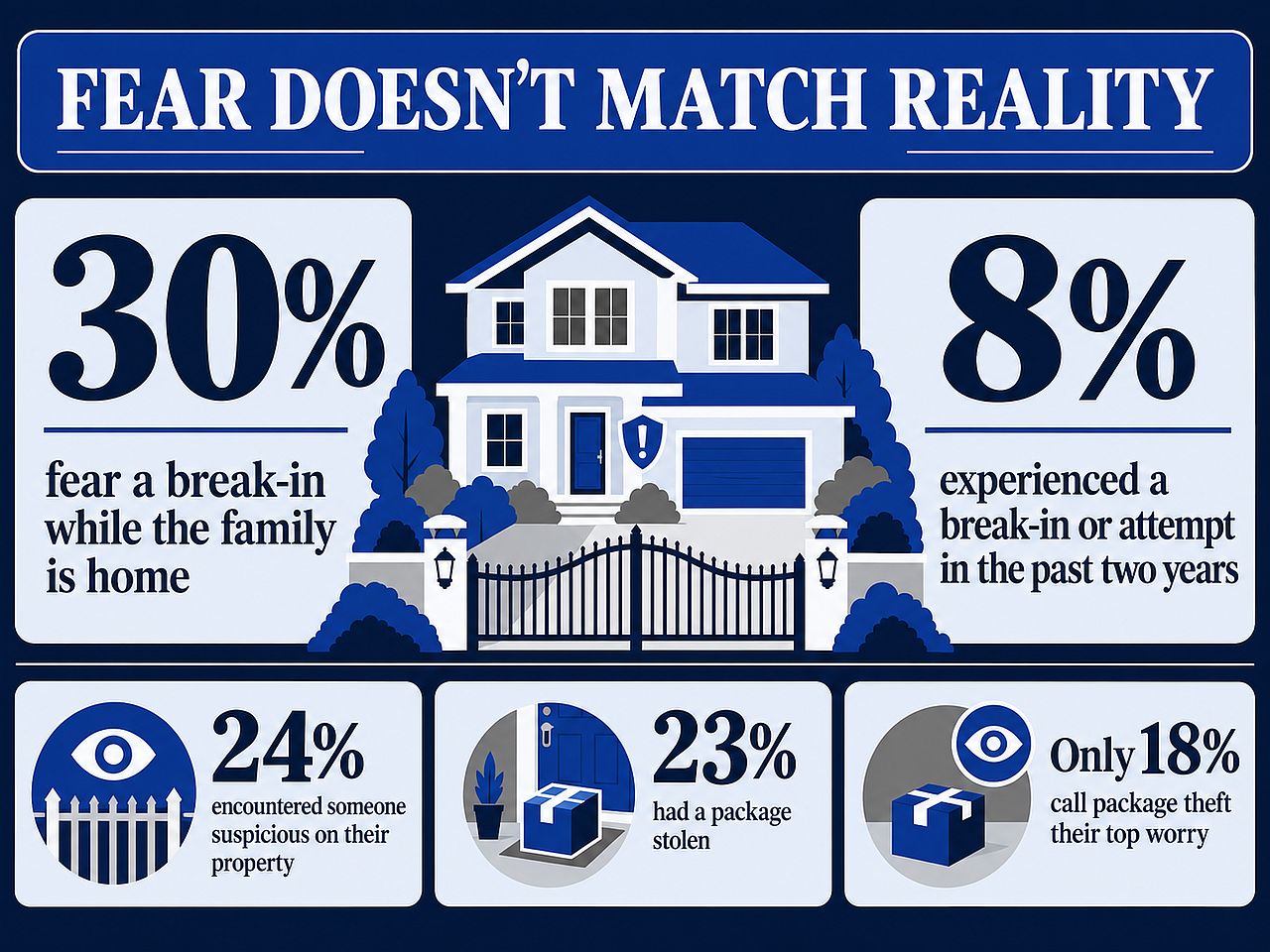
The single most selected fear in the survey is a break-in when the family is home, which was chosen by 3 in 10 respondents. However, the share of households that actually experienced a break-in or an attempted break-in over the last two years was less than 1 in 10.
The Bureau of Justice Statistics victimization data shows that roughly three-quarters of household burglary cases happen when no one is home. So the scenario that frightens Americans most is rare in cases that are already at a record low.
Meanwhile, the instances that do happen barely register on the worry scale. Nearly a quarter of households have dealt with a suspicious person on their property, and another quarter have had a package stolen. While frustrating, only roughly 1 in 5 Americans rank package theft as their top fear.
That fear is rewriting routines
Tri-State Gate
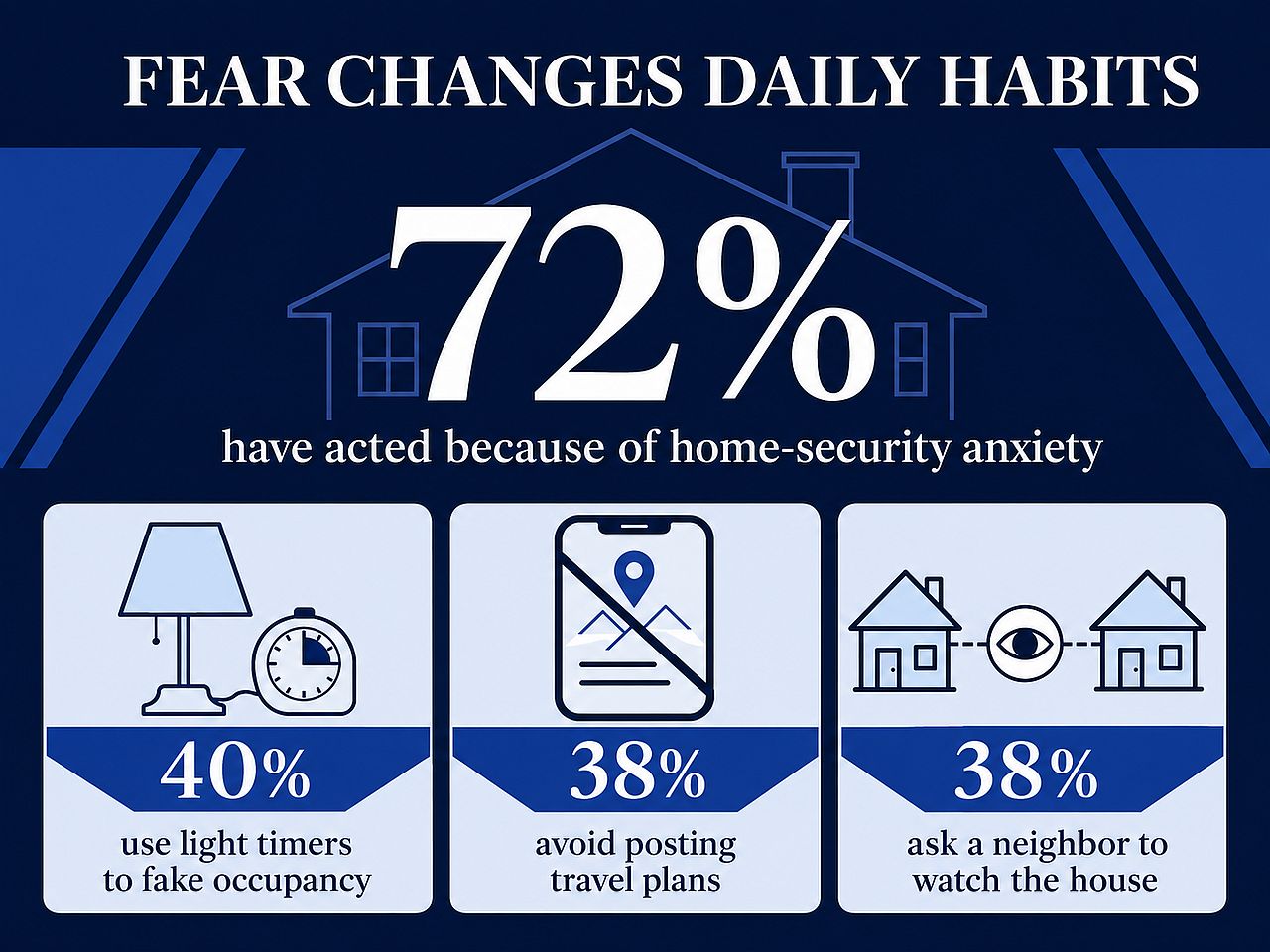
More than 7 in 10 Americans have taken at least one action specifically because of security anxiety, and almost none if it involves the house itself.
Four in 10 Americans leave lights or the TV on to simulate occupancy. One group (38%) keeps travel plans off social media, while another (38%) asks a neighbor to keep an eye on things (respondents could pick more than one answer). A smaller group (15%) stopped having packages delivered to their house, a choice that rose to 22% among higher-earning households.
Many respondents invested in security cameras, with nearly 7 in 10 in possession of one. Yet these devices have created a monitoring habit instead of peace of mind. Among camera owners, about a third check them multiple times a day while nearly half check them at least daily. Combined with those who check whenever their cameras alert them, over 4 in 5 Americans are checking cameras daily or on demand.
With concealment, routine, and surveillance covered, who’s investing in physical protection?
Most are waiting for crime to happen first
Tri-State Gate
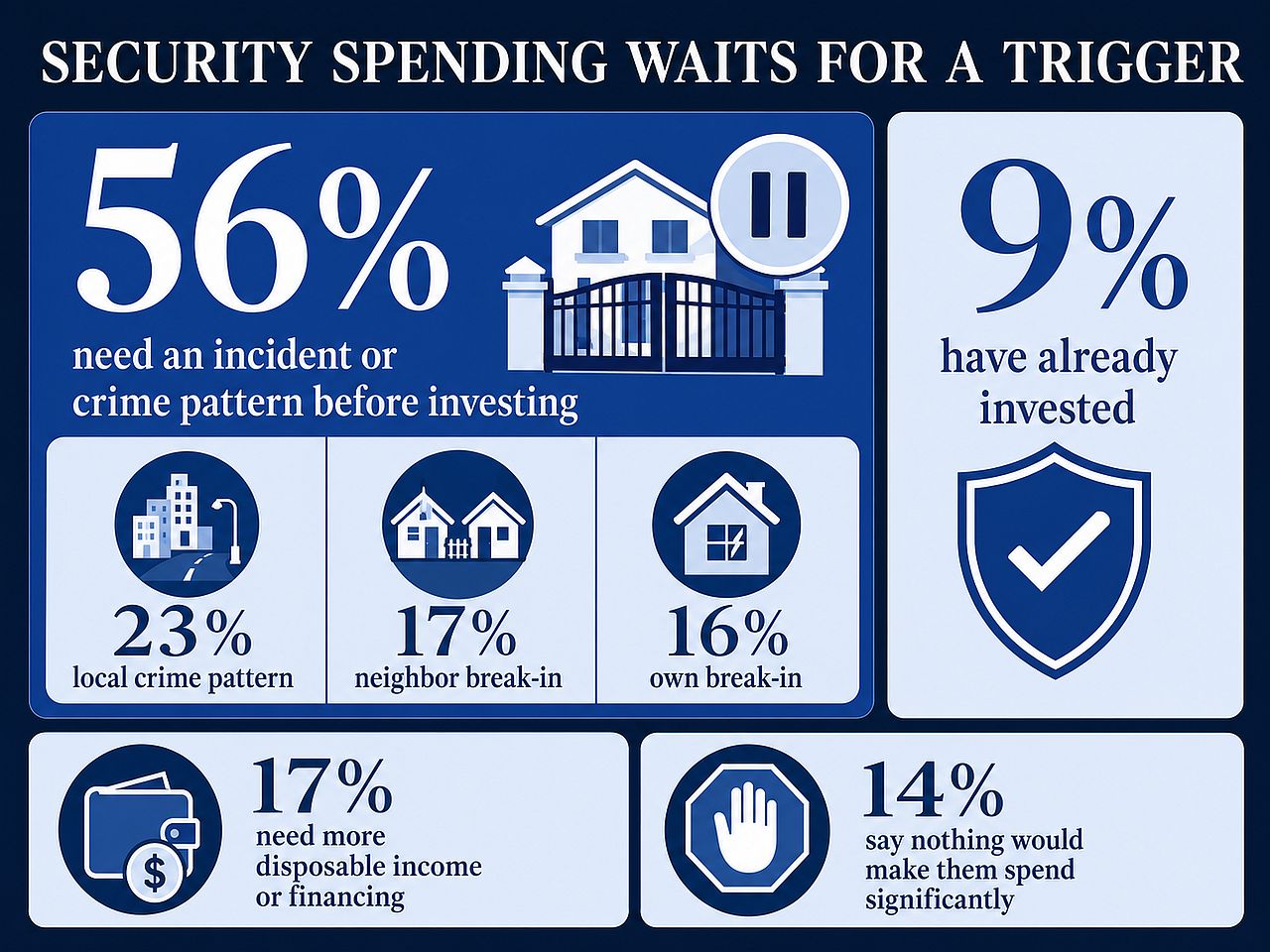
More than half of Americans said they need an incident to happen first before seriously investing in physical protection: a break-in at their own home (16%), one at a neighbor’s (17%), or a visible pattern of local crime (23%). Less than 1 in 10 say they’ve already made that investment.
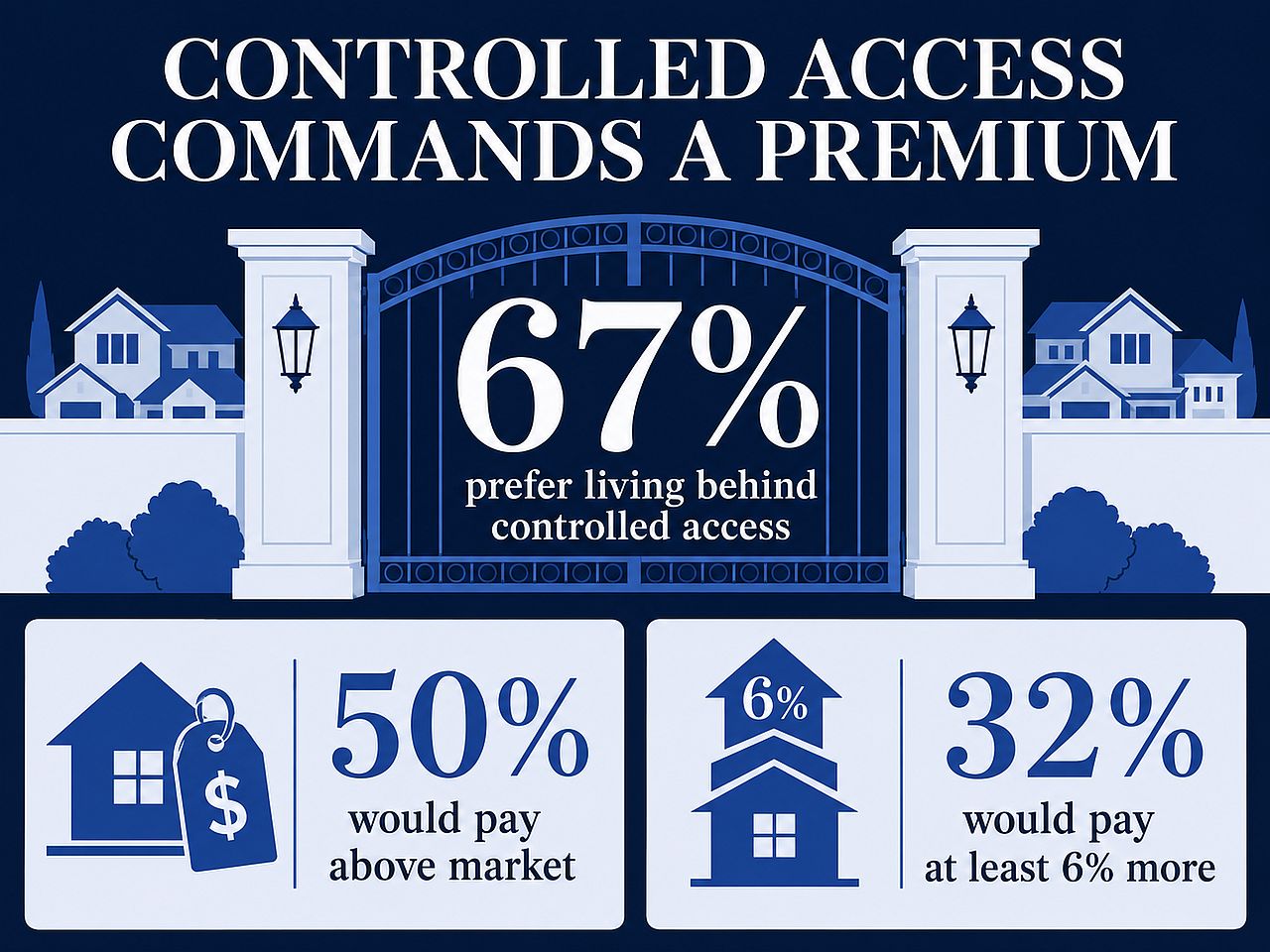
Yet the demand is there. Exactly half of respondents would pay above market for a home in a gated community or with a controlled entrance, with nearly a third saying they would pay at least 6% above asking price.
Tri-State Gate
Parents with children under 18 lead the group, with over 2 in 5 saying they would pay a premium. Housing research from the American Real Estate Society has already shown that homes in gated communities are priced $30,000 more than nongated, so the market has already taken what buyers want into account.
All in all, over two-thirds of Americans say they’d pay to live behind a barrier, but most are waiting for a break-in to justify one, a trigger that federal data says may never happen.
About the data
The survey was fielded through Pollfish in August 2026 and polled 1,000 American adults on their fears, their experiences with property crime, their camera habits and what they’d pay for physical protection. Responses were broken out by demographic group. The study was commissioned by Tri-State Gate, a New York company that sells automated gate and access control systems, so its findings on gated housing should be read with that sponsorship in mind.
This story was produced by Tri-State Gate and reviewed and distributed by Stacker.

